A high power contactor starts to matter when a normal relay can no longer absorb the load. In practical terms, many contactors begin above 15 A, and industrial models can switch hundreds or thousands of amperes. If you are selecting one for a motor, battery system, heater bank, or power distribution panel, the decision rarely stops at current rating. It also depends on inrush current, duty cycle, voltage type, arc control, coil drive, and the environment where the device will live.
Choose a contactor when the load is heavy, switching is frequent, and arc energy at contact opening is significant. Choose a high current relay or compact module when the load is moderate, the package is small, and the switching duty is lighter. The boundary is not fixed. A 30 A relay may work well in one cabinet and fail early in another because the load is a motor rather than a resistive heater.
What a High Power Contactor Does Under Load
Inside a contactor are four functional groups: the coil, magnetic core and armature, main contacts, and arc suppression system. A low power control signal energizes the coil. Magnetic force pulls the armature and closes the main contacts. When the coil de-energizes, a spring returns the armature and opens the contacts. In a normally open contactor, the main circuit is off until the coil is powered. This arrangement lets a PLC output, thermostat, or pilot device control a much larger circuit safely.
The main design challenge is not closing the contacts. It is opening them. When contacts separate under load, current can sustain an arc that erodes metal, raises temperature, and delays the break. Contactors therefore add arc chutes, magnetic blowout coils, splitter plates, vacuum chambers, or gas filled chambers. The correct method depends on current, voltage, and whether the supply is AC or DC.
Contactors also differ from relays in duty expectation. A contactor may start a motor thousands of times per year, so spring force, contact material, and terminal temperature rise are critical. High current relays sit between signal relays and contactors.
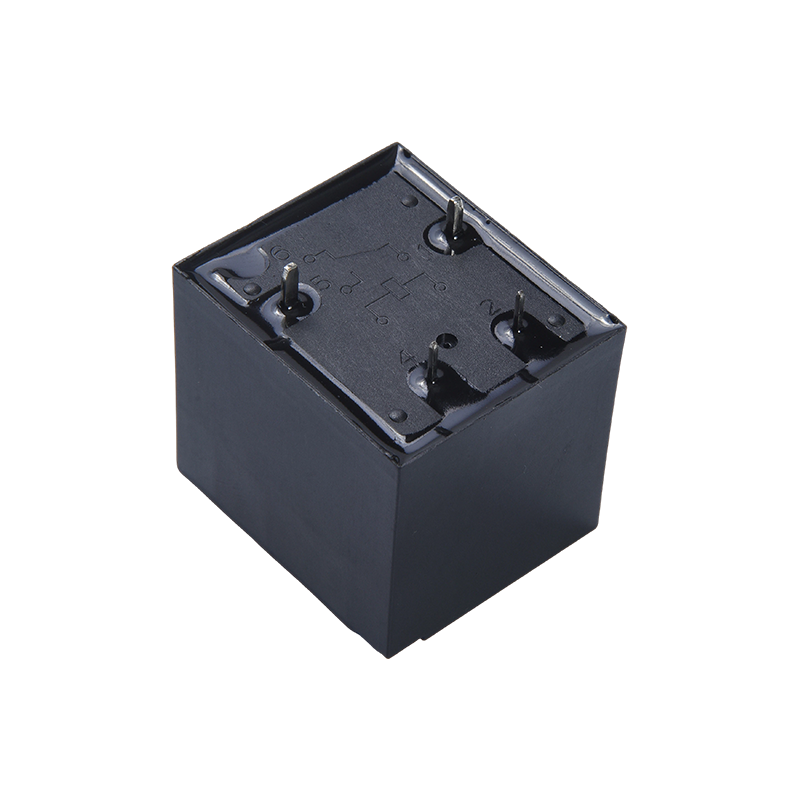
For compact designs that still need higher current, a high current relay can be a practical alternative. The CY T90 series is a high current SPDT relay offered in 30 A and 40 A versions.
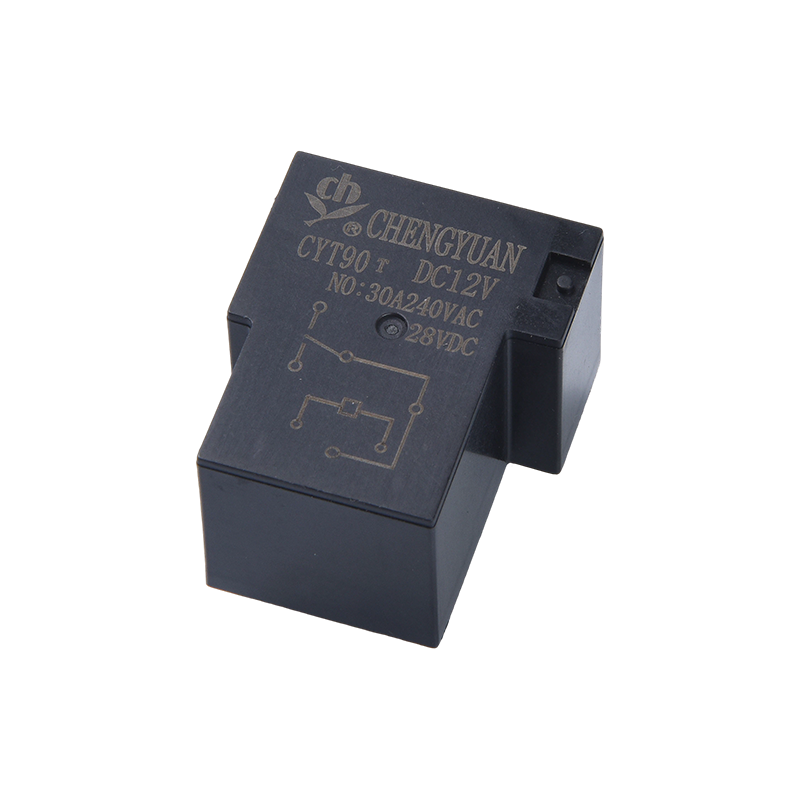 CYT90 High-Current SPDT Power RelayCompact high-current SPDT relay for switching loads where space is tight; useful before comparing IEC contactor ratings and arc behavior.View Product →
Ratings and Utilization Categories That Matter
Datasheet current is not enough. A contactor rated 40 A for a resistive load may have a much lower motor rating. IEC utilization categories describe this difference. AC-1 covers non-inductive or slightly inductive loads. AC-3 covers squirrel cage motors where the contactor closes at locked rotor current and opens at rated current. AC-4 covers inching and plugging duty, where the contactor opens at high current and faces severe arcing. DC categories are similarly demanding because DC arcs do not self-extinguish at a zero crossing.
Use the table below to compare how contactors and high current relays are usually applied. The values are general guidance, not a substitute for the manufacturer datasheet and applicable standard.
Table comparing high power contactors and high current relays for load switching decisions.
| Feature |
High power contactor |
High current relay |
| Typical current |
Often above 15 A, up to thousands of amperes |
Commonly 10 A to 40 A, some higher |
| Primary design focus |
Motor starting, high breaking capacity, arc control |
Compact switching, isolation, PCB or panel integration |
| Arc control |
Arc chute, blowout, vacuum, or gas chamber |
Smaller arc suppression, contact spacing, and material |
| Duty cycle |
Frequent switching and motor loads |
Moderate switching, resistive or light inductive loads |
| Coil drive |
Higher coil power, dedicated control circuit |
Lower coil power, often driven by electronics |
| Mounting |
Panel, DIN rail, busbar |
PCB, plug-in, DIN rail module |
| Best fit |
Motors, battery systems, power distribution |
Control circuits, compact loads, relay modules |
Other ratings include coil voltage, insulation voltage, making and breaking capacity, mechanical life, electrical life, terminal type, and mounting. A contactor with the right current but the wrong coil voltage will not operate reliably.
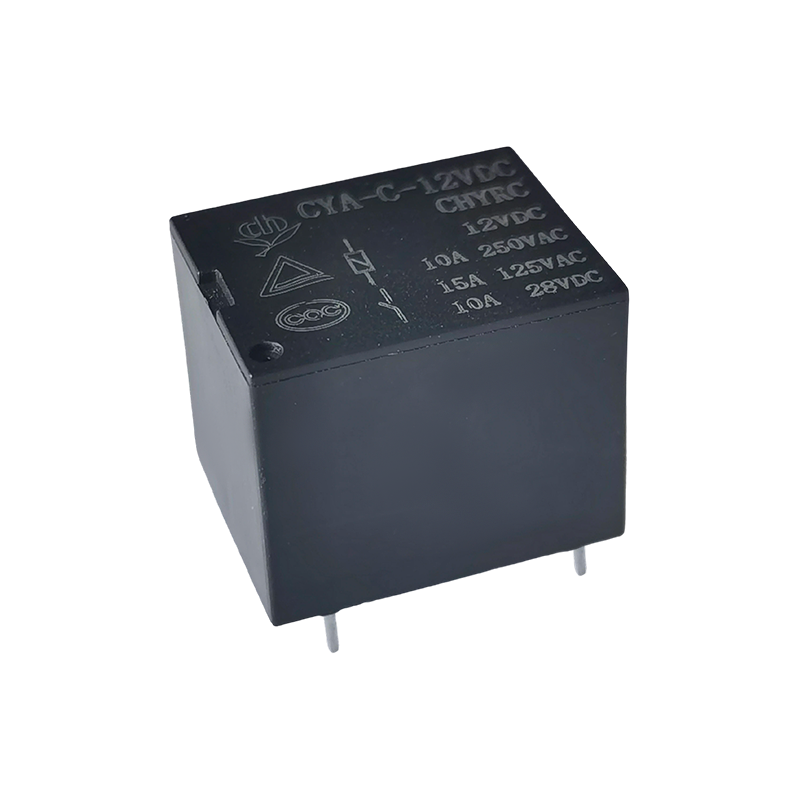
When the required rating is still in the relay range, a 30 A to 40 A SPDT relay such as the CY T91 can provide high current switching in a smaller package.
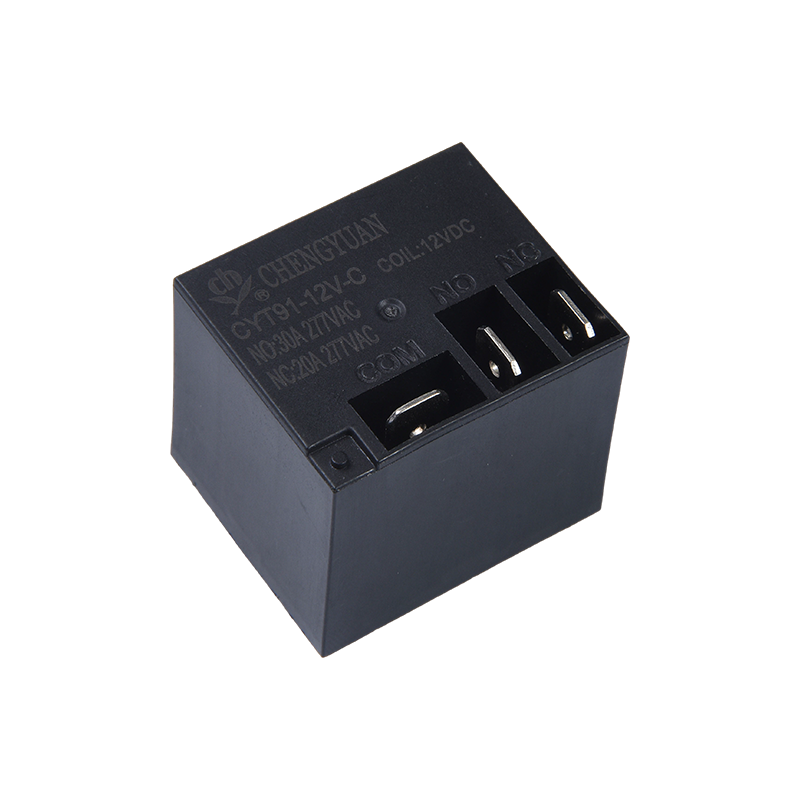 CYT91 / T91 High-Current SPDT Power RelayCompact 30 A SPDT power relay for high-current switching in tight spaces; a relay alternative before considering AC or DC contactor arc behavior.View Product →
AC and DC Switching Are Not Interchangeable
AC contactors benefit from natural current zeros, so arcs have a chance to extinguish. DC contactors face a continuous arc that must be stretched, cooled, and split quickly, or the contact gap must withstand the full voltage. This is why a DC contactor often has a different contact structure, magnetic blowout, and larger physical size than an AC device with the same current rating.
High voltage DC applications make this difference obvious. Battery packs, solar arrays, and charging systems can deliver dangerous energy even after the main switch opens. The contactor must break the circuit safely, isolate the load, and resist welding. Verify the actual time constant, short circuit current, and maximum voltage, not only nominal voltage.
AC coils and DC coils are also different. Match the coil to the control supply and confirm pickup, dropout, and holding current.
A Selection Checklist for High Power Contactor Projects
- Define the load. Identify resistive, inductive, capacitive, motor, transformer, or battery load. Note steady current and inrush current.
- Confirm the switching voltage. Record nominal, maximum, and transient voltage. Separate AC and DC requirements.
- Choose the utilization category. Use AC-1, AC-3, AC-4, DC-1, or the category that matches the real duty.
- Match the coil. Verify coil voltage, AC or DC, pickup, dropout, and holding current.
- Check the duty cycle. Estimate operations per hour and expected electrical life. Motor jogging can shorten life quickly.
- Review arc suppression and terminals. Confirm arc chamber, blowout direction, terminal torque, and busbar or PCB layout.
- Validate environment and standards. Check ambient temperature, humidity, vibration, pollution degree, and required certification.
- Test the prototype. Perform make and break tests at worst case voltage and current before production release.
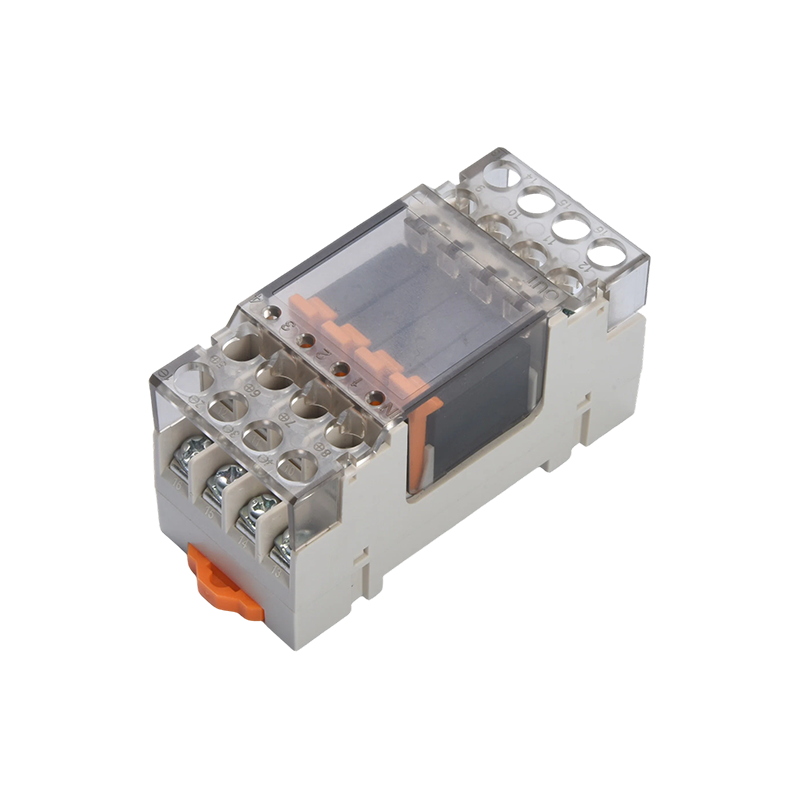
For panel builders, rail mounted modules can simplify wiring and replacement. A DIN rail relay module with a 16 A contact, such as the MCYF3 14F rail relay module, can handle compact industrial control tasks where a full contactor would be oversized.
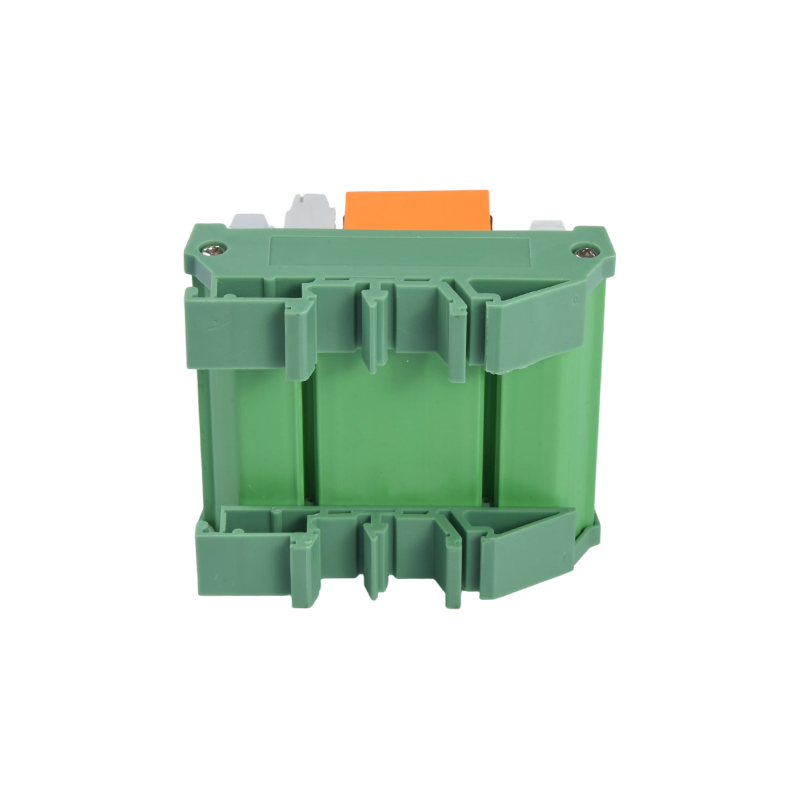 MCYF3 14F DIN Rail Relay ModuleModular 16 A rail-mounted relay module for centralized industrial control, simplifying wiring and replacement where a full contactor would be oversized.View Product →
Applications and Integration Points
High power contactors appear wherever a low power signal must control a high energy circuit. Common examples include:
- Motor starters and pump control panels, where contactors handle starting current.
- HVAC compressors and fans, where frequent cycling and inductive loads demand rugged contacts.
- Battery energy storage and DC distribution, where isolation and arc suppression are safety critical.
- Solar inverters and charging equipment, where high voltage DC must be switched reliably.
- Industrial heating and lighting banks, where resistive loads may still require large current capacity.
Integration matters as much as the contactor itself. Enclosure size affects heat rise. Wiring length affects voltage drop and surge. Coil suppression can prevent PLC output damage. Use an RC snubber, flyback diode, or varistor as appropriate for the coil type.
Common Procurement Risks and How to Reduce Them
The most common mistake is comparing only the headline current rating. A 40 A relay and a 40 A contactor may look similar on a specification line, but their breaking capacity, duty cycle, and thermal behavior can be very different. Another risk is assuming that a contactor rated for AC will work on DC. It usually will not, at least not safely or for long.
Procurement teams should also check the datasheet revision, coil voltage, contact arrangement, terminal orientation, and certification documents. When the application involves safety functions, request test data and a sample for validation.
For custom or moderate volume projects, working directly with a relay manufacturer can shorten the selection loop. The company behind this site has manufactured relays and industrial control modules since 1996 and can review load, coil, and mounting requirements against available products. You can review the company background or send application details for a quote.
Matching the Device to the Real Load
Start with the load, not the catalog page. Define current, voltage, inrush, duty cycle, environment, and required life. Then decide whether a high power contactor, a high current relay, or a DIN rail module is the right level of switching. Contactors are built for heavy loads and frequent operation. High current relays and modules are better when the load is moderate and the package must stay compact.
If the application is borderline, test it. A device that passes a bench test at room temperature may fail in a sealed cabinet at 60 C. A contactor that holds a resistive load may weld on a motor start. The extra validation step is usually cheaper than a field failure.

 English
 中文简体
 Español