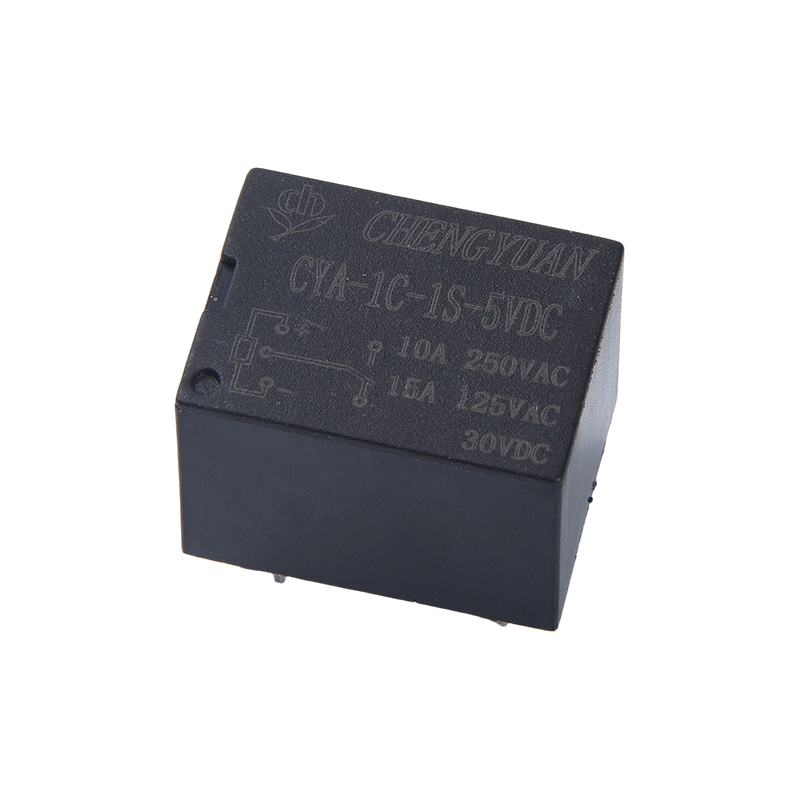
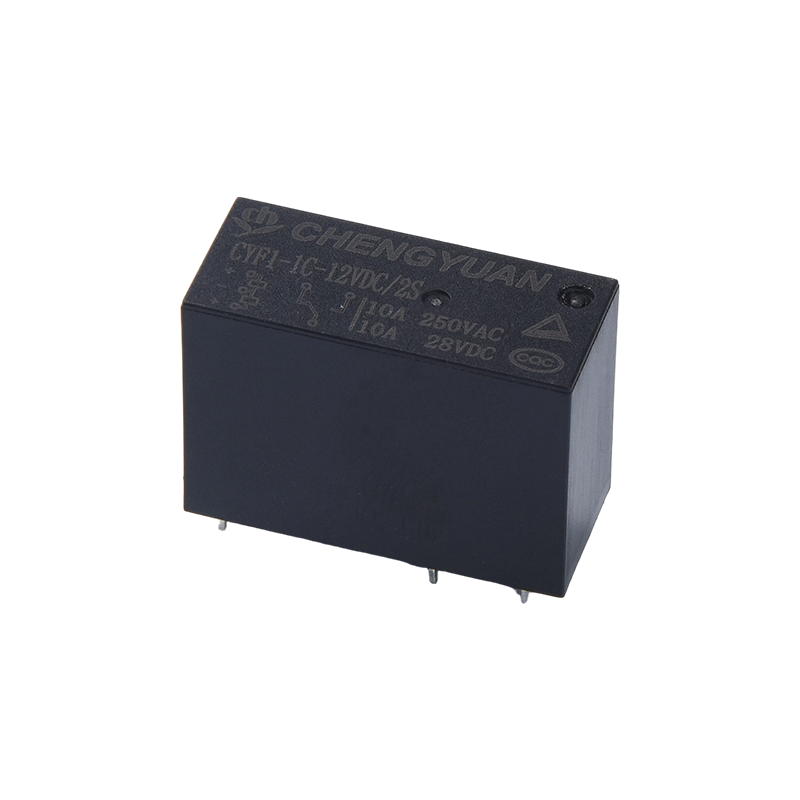
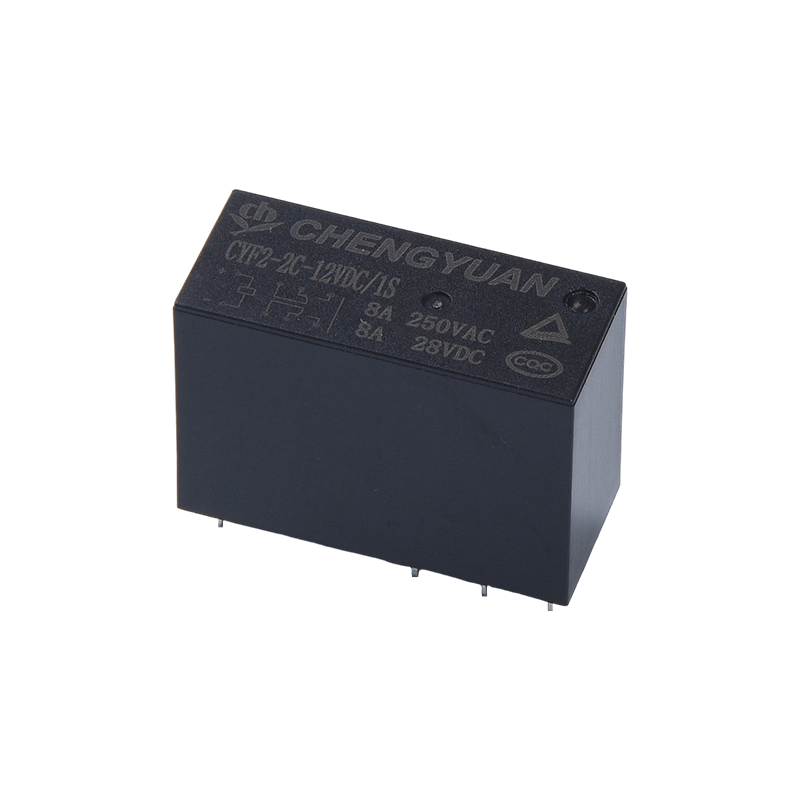
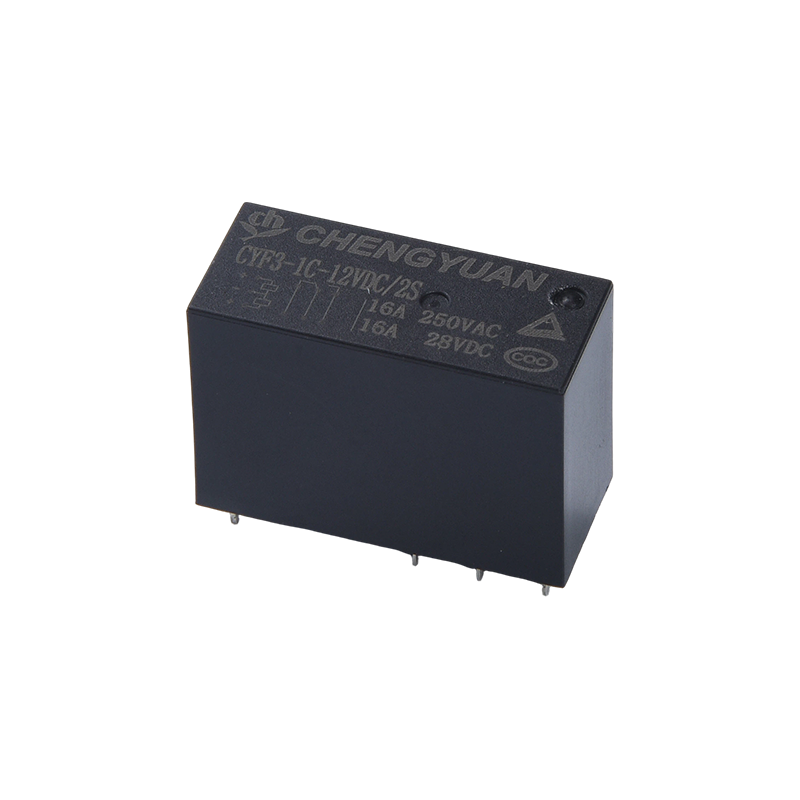
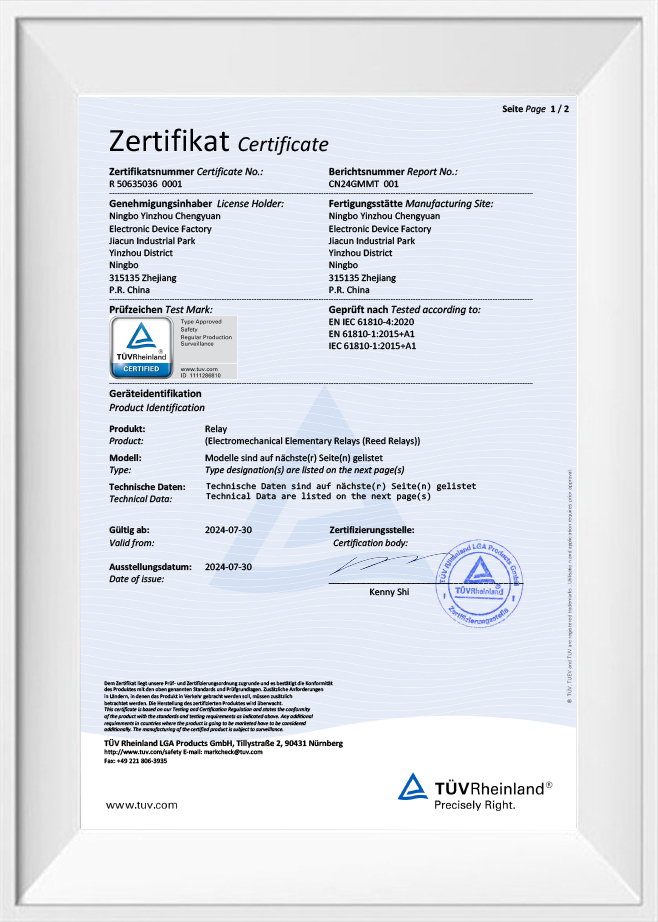
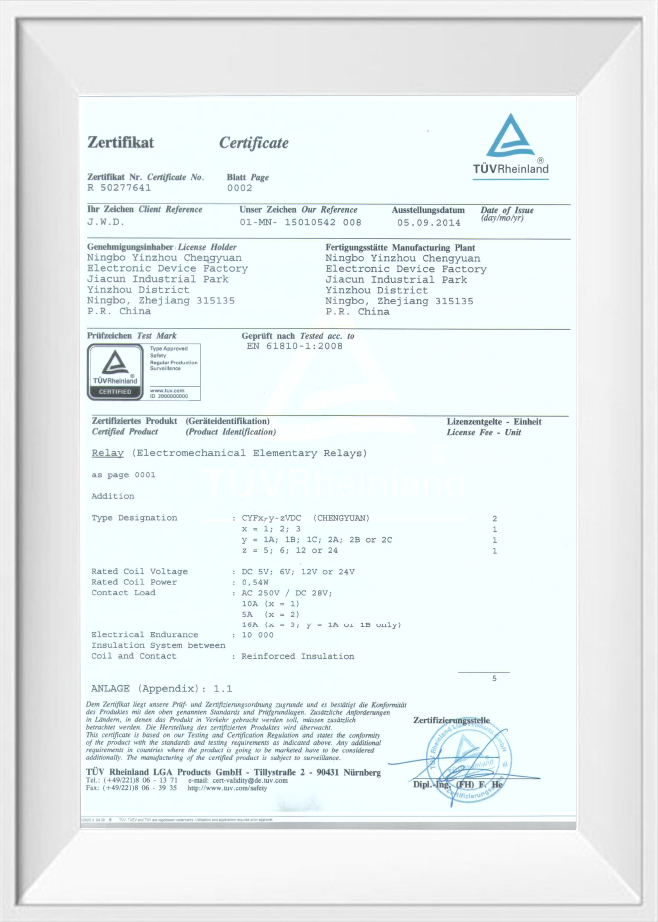
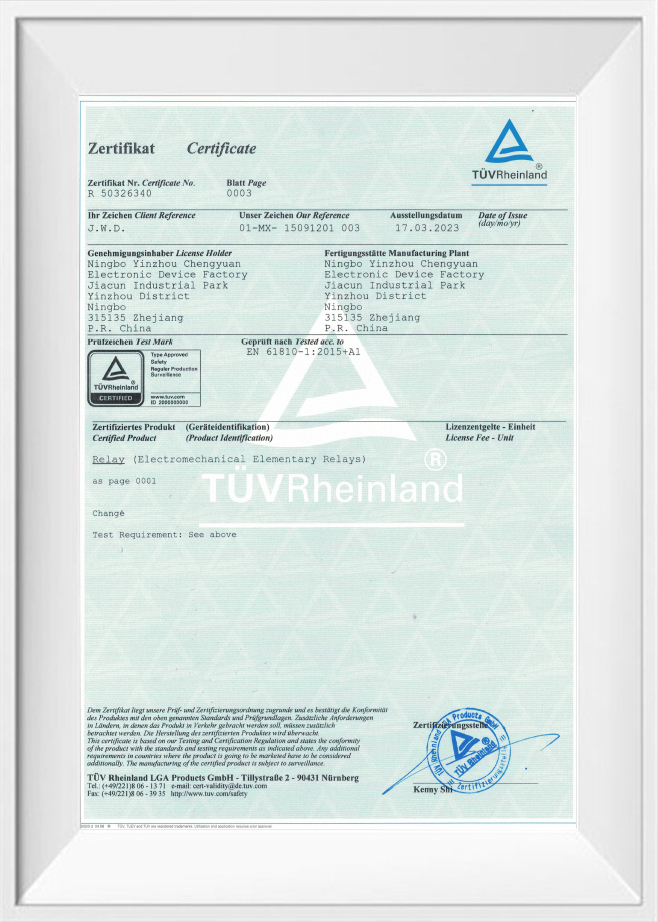
A magnetic latching relay is a special type of electrical switch. These products use a permanent magnet to keep the contacts in a closed state, maintaining this position even after power is cut off. Unlike standard relays, which require continuous power to keep the contacts closed, self-locking relays use a permanent magnet to "hold" their state. The direction is changed by the magnetic force of the coil. These products are mainly used in applications where contact switching is infrequent, such as electricity meters and smart home devices.
About Us
Ningbo Chengyuan Chuangke Electronics Co., Ltd.
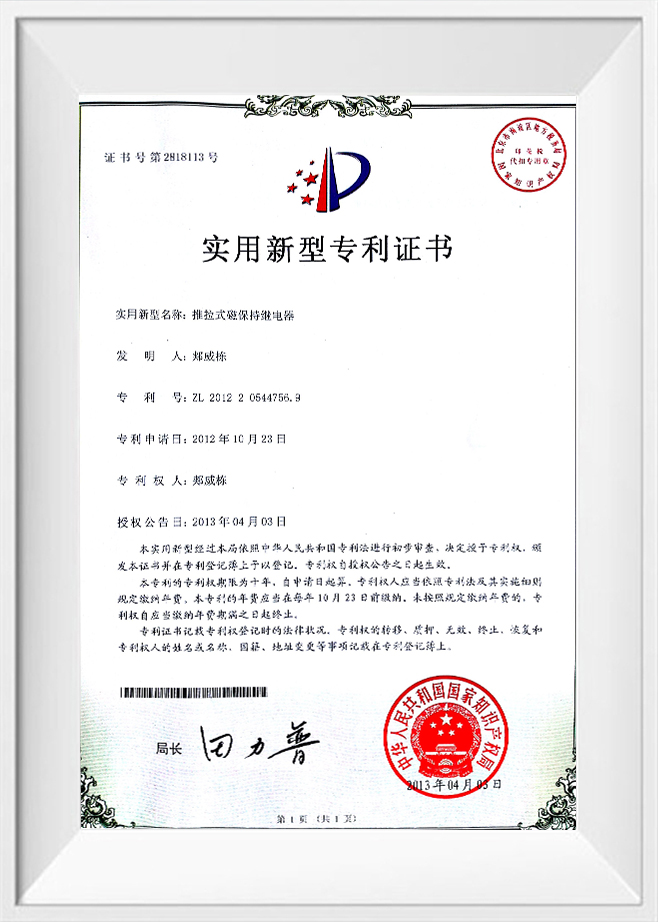
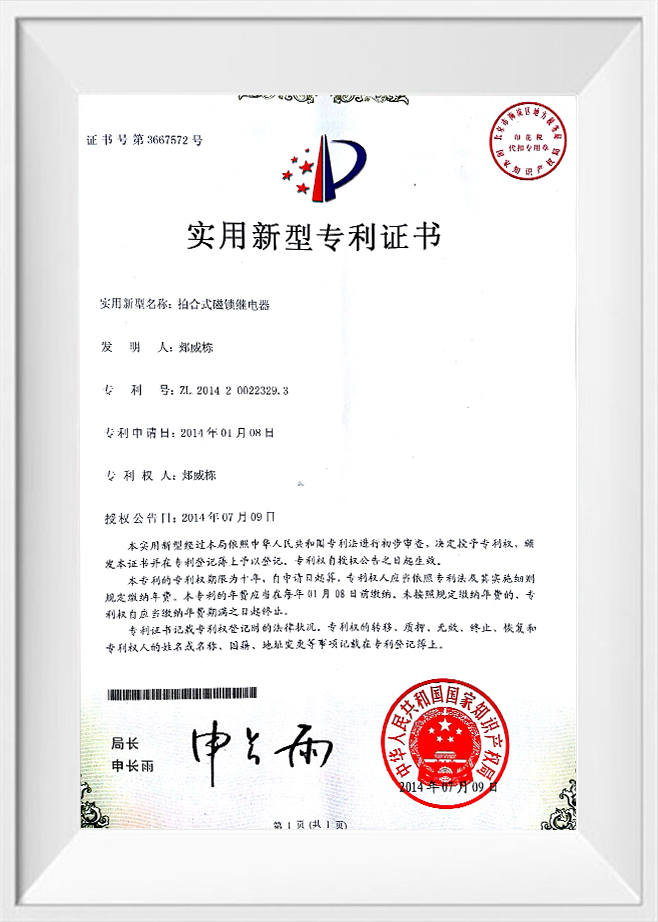
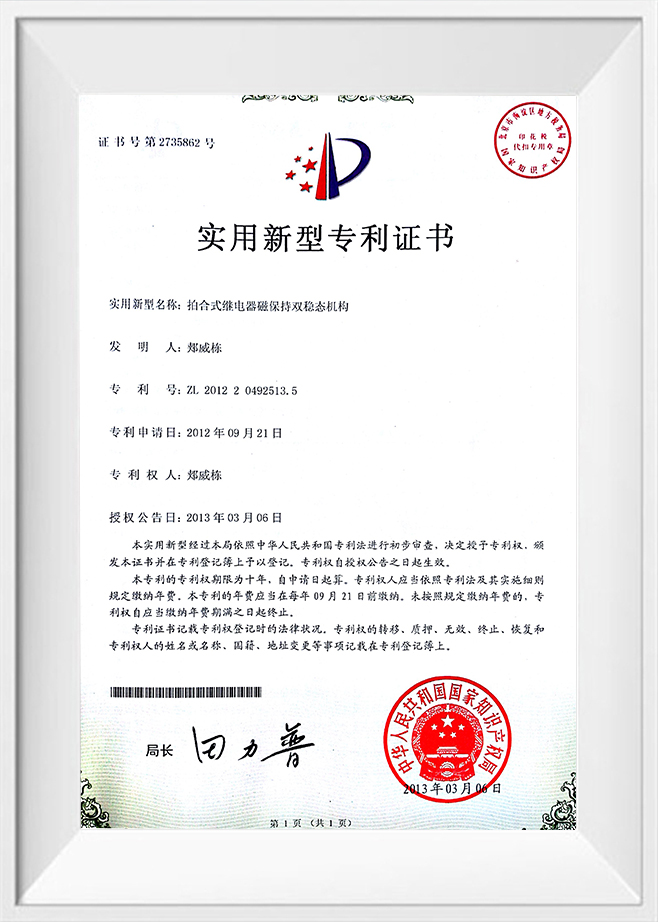
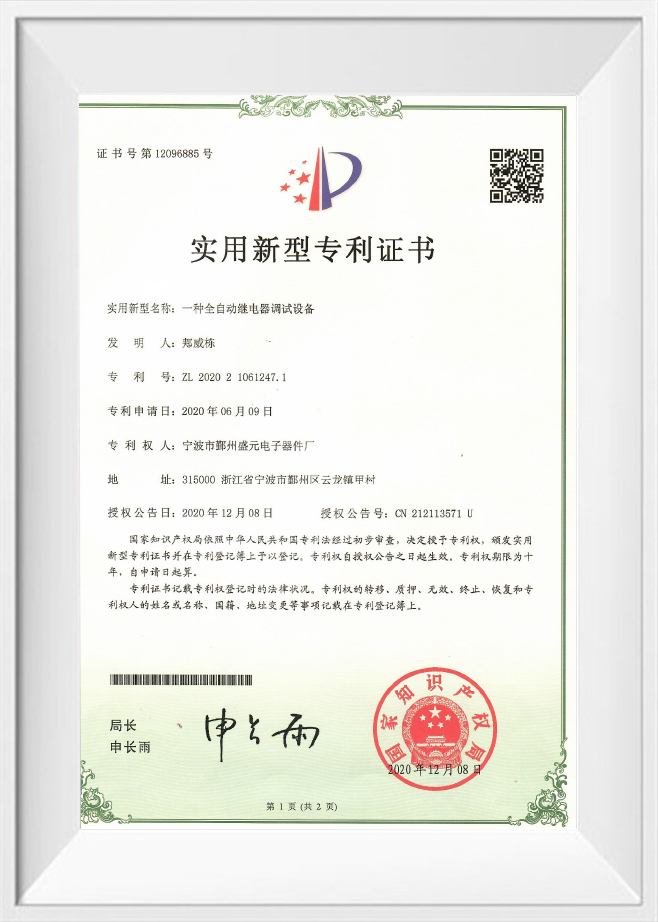
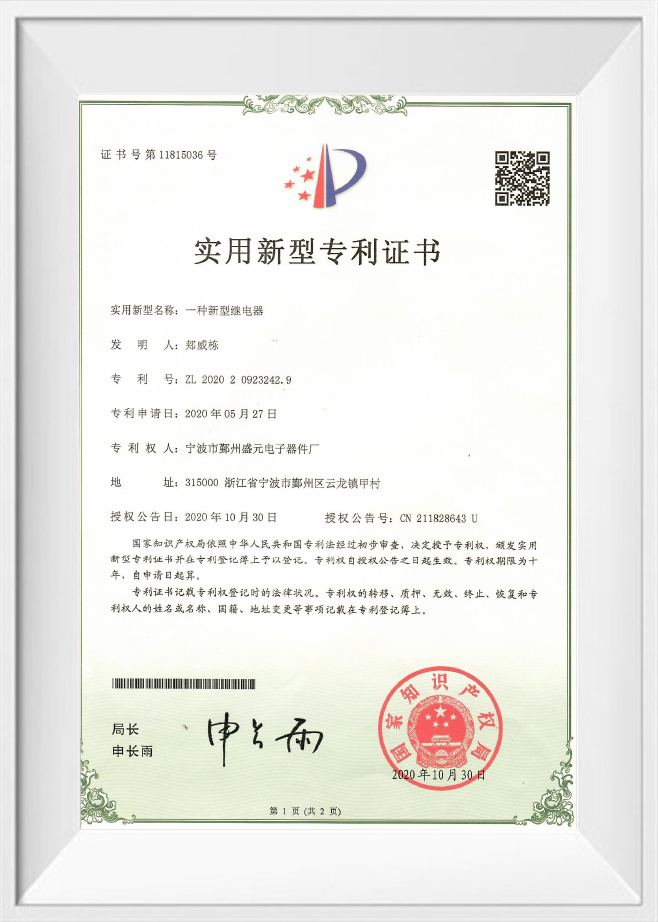
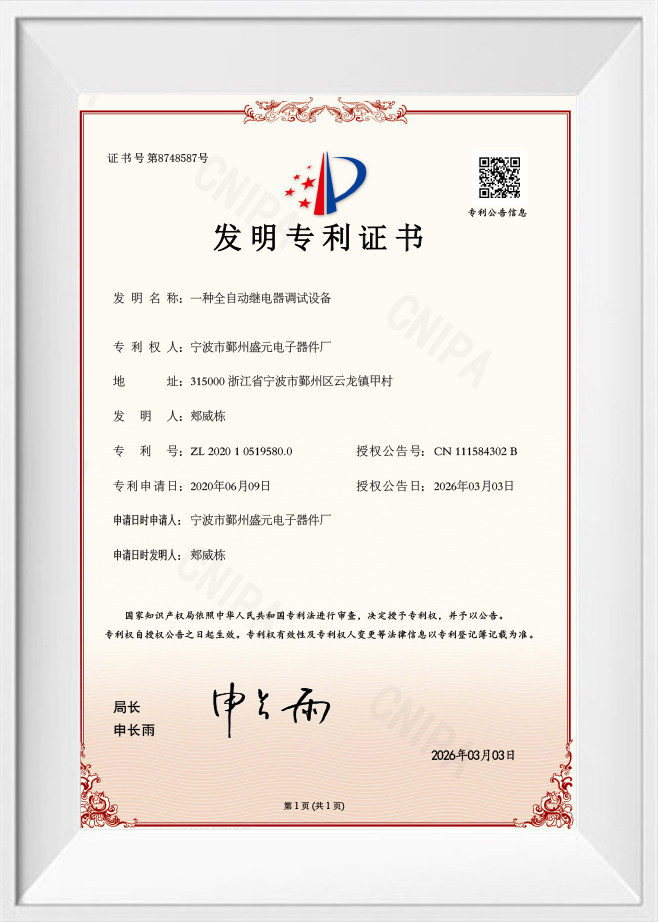
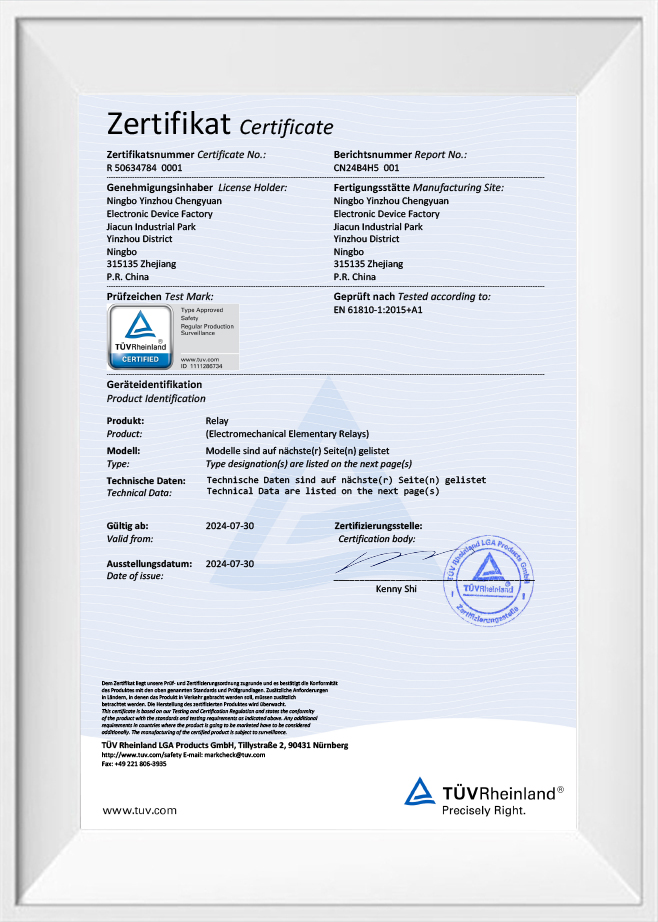
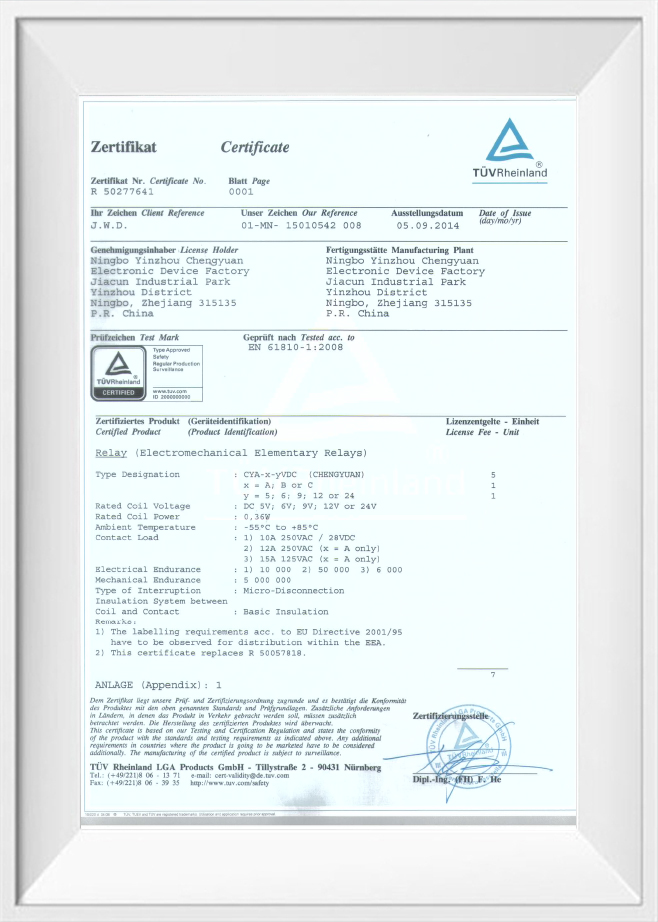
Ningbo Chengyuan Chuangke Electronics Co., Ltd. is a China OEM/ODM Magnetic Latch Relay Manufacturer and Latching Relay Supplier, subsidiary of Ningbo Yinzhou Chengyuan Electronic Device Factory. Having been deeply engaged in relay manufacturing for nearly 30 years, we are a professional manufacturer integrating R&D, production, and sales. With the core principle of "honesty as the foundation and quality as the soul", we rely on efficient teamwork to build a reputation for reliable products. The factory has introduced automated production equipment, selected high-quality materials, and strictly controlled the entire process quality to ensure the stability and durability of the products. Based on the domestic market, we actively expand our international layout. With excellent quality and honest services, we have won the recognition of customers both at home and abroad. We always adhere to our original intention and empower industrial upgrading through technological innovation. We are committed to becoming a reliable partner in the relay field.
A packaging line loses its motor starter in the middle of a shift. The contactor coil has been tested and the overload relay is reset, but the PLC still shows the motor as running. The technician opens the cabinet and finds the contactor is open. No feedback is wired back to the...
A maintenance electrician at a bottling line reaches for a replacement contactor after the original coil fails. The replacement sits on the bench, and the wiring diagram on the side of the old unit is torn. In most contactors, the coil terminals are labeled A1 and A2. Getting th...
A Reed relay works by using an electromagnetic coil to create a magnetic field that pulls two thin ferromagnetic reed blades together inside a sealed glass tube, closing an electrical circuit. When current flows through the coil, the magnetic flux magnetizes the overlapping end...
A latching relay holds its contact position after the coil is de-energized, using a mechanical latch or a permanent magnet to maintain state without continuous power. This is the defining difference from a standard relay, which requires constant coil current to keep its contacts closed. A magnetic latch relay achieves this by using a small permanent magnet to hold the armature in place once a brief pulse has moved it, meaning the coil only needs to be energized momentarily to switch states rather than staying powered throughout the entire on-cycle.
The practical result of a magnetic latching relay design is a meaningful reduction in average power draw, since the coil is only active during the brief set or reset pulse. This makes the technology particularly relevant for battery-powered systems, remote metering equipment, and any application where standby power consumption matters. This article walks through measured switching behavior, power comparison data, and structural trade-offs to clarify where a latching relay offers the clearest benefit.
Power Consumption Compared Across Relay Types
The most measurable benefit of a latching relay shows up in average power consumption over a typical duty cycle. The horizontal bar chart below compares coil power draw across four relay categories under a scenario where the contact stays in one position for an extended period between switching events. A standard non-latching relay must hold coil current the entire time the contact remains closed, while a magnetic latch relay only draws power during the brief moment it changes state. The difference becomes dramatic as hold time increases, which is exactly the scenario most relevant to real-world control and metering applications where a relay might stay in one position for hours or days at a time.
Over a 24-hour hold period, a magnetic latch relay draws approximately 2mW on average, compared to around 420mW for a standard relay holding the same contact position, a difference driven entirely by the fact that the latching design only needs current during the brief switching pulse itself. This gap only grows wider as hold duration increases, which is why latching technology is so often specified for remote or battery-powered equipment.
Switching Pulse Behavior Across Repeated Operations
Because a magnetic latching relay relies on a brief pulse to change state, the consistency of that pulse response over time matters just as much as the standby power savings. The line chart below tracks the minimum pulse duration required to reliably actuate the relay across five stages of a switching life test, from an early 50,000 operations up to 1 million operations. A slight increase in required pulse width is expected as the mechanical latch and magnetic components experience minor wear, but the trend should stay gradual rather than showing a sudden jump. In this test, the required pulse duration increases only modestly across the full million-cycle range, indicating that the magnetic latch retains reliable holding force well beyond typical service intervals.
Required pulse duration moves from roughly 6ms at 50,000 cycles to about 11ms at 1 million cycles, a change that stays comfortably within the drive circuit design margin most control systems allocate for a latching relay. This predictable, gradual pattern is a strong indicator of consistent magnetic latch performance rather than premature mechanical wear.
Where Latching Relays Are Applied Most
The power efficiency of a latching relay naturally points its use toward applications where standby current matters as much as switching performance. The vertical bar chart below shows typical usage distribution across common application categories, based on aggregated field patterns. Smart metering and remote monitoring equipment leads by a wide margin, followed by battery-powered access control, solar and renewable energy systems, and industrial equipment where reduced heat generation from lower average current is also a meaningful secondary benefit.
Smart metering and remote monitoring account for roughly 35% of typical deployment, which lines up directly with the near-zero standby power draw discussed in the previous section. Battery-powered access control systems follow closely, since a magnetic latch relay can hold a locked or unlocked state indefinitely without draining the battery between switching events.
Latching Relay Versus Standard Relay Across Key Dimensions
A radar chart makes it easier to see the full trade-off between a magnetic latching relay and a standard non-latching relay, since it plots multiple dimensions at once rather than reducing everything to a single number. The chart below compares both relay types across standby power efficiency, control circuit simplicity, state retention reliability, switching speed, and mechanical complexity. The latching relay extends much further on standby efficiency and state retention, while the standard relay extends further on control circuit simplicity, since it does not require separate set and reset drive logic. This trade-off is exactly why the choice between the two often comes down to whether power efficiency or driver simplicity matters more for a given design.
The chart confirms that a latching relay is the stronger choice whenever standby power and state retention matter most, while a standard relay remains simpler to drive from a basic control circuit. Neither option is universally better; the decision depends on whether the application prioritizes energy efficiency or minimal driver complexity, and many system designs end up using both relay types for different subsystems within the same product.
Practical Guidance for Specifying a Magnetic Latch Relay
Specifying a magnetic latch relay correctly starts with confirming that the application genuinely benefits from state retention without continuous power. The table below summarizes practical scenarios where a latching design is typically the right fit, alongside cases better served by a standard relay instead.
Scenario-Based Selection Reference
Table 1: Practical guidance for latching relay selection by scenario
Scenario
Suitable Choice
Reason
Battery-powered smart meter
Magnetic Latch Relay
Near-zero standby power draw
Remote access control lock
Magnetic Latching Relay
Holds state without continuous current
Simple wall-powered control panel
Standard Relay
Simpler single-coil drive circuit
Solar-powered field equipment
Latching Relay
Minimizes drain on limited power budget
Before finalizing a latching relay in a design, a few additional checks help confirm long-term suitability:
Confirm the drive circuit can deliver the required set and reset pulse characteristics reliably.
Verify whether the application needs single-coil or dual-coil latching operation.
Check state-retention behavior under expected vibration or shock conditions.
Review contact rating against the actual load current of the switched circuit.
Plan for a position-sensing method if the control system needs to confirm current relay state after a power interruption.
The stable pulse-duration curve discussed earlier depends on consistent manufacturing of the permanent magnet, armature, and coil assembly inside a magnetic latching relay. Variation in magnet strength or armature alignment can shift the minimum pulse energy needed to reliably switch state, which is why tight process control matters more for latching designs than for simpler standard relays. Automated assembly and in-process magnetic testing help keep a magnetic latch relay performing within tight tolerances across production batches, supporting the predictable long-term behavior shown in the switching life data above.
Process verification steps such as magnetic flux testing, pulse-response sampling, and mechanical cycling checks are standard practices that support the reliability data referenced throughout this article. For engineers sourcing a latching relay at scale, confirming these quality checkpoints with a supplier is often as valuable as reviewing the published datasheet specifications.
About Ningbo Chengyuan Chuangke Electronics Co., Ltd.
Ningbo Chengyuan Chuangke Electronics Co., Ltd. is a subsidiary of Ningbo Yinzhou Chengyuan Electronic Device Factory. Having been deeply engaged in relay manufacturing for nearly 30 years, the company operates as a professional manufacturer integrating R&D, production, and sales of latching relay and related switching components. Its core principle, "honesty as the foundation and quality as the soul," is supported by efficient teamwork aimed at building a reputation for reliable products across both domestic and international markets.
The factory has introduced automated production equipment, selects high-quality materials, and applies strict process controls across the entire production chain to support the stability and durability of finished units. Based on the domestic market, the company actively expands its international layout, and its focus on quality and honest service has helped it build recognition among customers both at home and abroad. Guided by continued technological innovation, Ningbo Chengyuan Chuangke Electronics Co., Ltd. works to empower industrial upgrading and aims to remain a dependable partner for organizations sourcing magnetic latch relay solutions.
Frequently Asked Questions
Q1: How does a latching relay hold its position without continuous power?
A1: It uses a permanent magnet or mechanical latch to keep the armature in place after a brief coil pulse, so no ongoing current is needed to maintain the contact state.
Q2: What is the main advantage of a magnetic latch relay in battery-powered systems?
A2: Since the coil only draws current during the brief switching pulse, standby power consumption drops dramatically compared to a relay that must stay energized to hold its position.
Q3: Does a magnetic latching relay require a more complex drive circuit?
A3: Yes, it generally needs set and reset pulse logic rather than a simple continuous coil signal, which adds some circuit complexity in exchange for the power savings.
Q4: How can a system confirm the current state of a latching relay after a power loss?
A4: Many designs add a position-sensing method, such as an auxiliary contact or feedback signal, so the control system can verify relay state once power is restored.
Q5: What manufacturing factors most affect latching relay reliability?
A5: Consistent permanent magnet strength, precise armature alignment, and controlled coil winding are the key factors that determine how reliably a magnetic latch relay switches state over its rated life.

 English
 中文简体
中文简体 Español
 +86 15397227212