A no-heat call on the coldest morning of the year usually ends at the same component. The thermostat is calling, the control board is sending 24 VAC, the transformer checks out, and the heating elements are still cold. The furnace contactor is the part that stopped doing its job.
A furnace contactor is a heavy-duty electrically operated switch. A low-voltage coil, almost always 24 VAC in residential equipment, pulls in line-voltage contacts that carry the full current of heating elements or a blower motor. Three numbers define the correct part: coil voltage, contact current rating at the applied voltage, and pole configuration. Match all three and the contactor runs for years of heating seasons. Miss one and the result is welded contacts, a chattering coil, or the same no-heat call next winter.
What a Furnace Contactor Does in the Circuit
The contactor exists to keep low-voltage control wiring away from line voltage. Thermostats and control boards work at 24 VAC, which is safe to route through thin thermostat cable. Heating elements, blower motors, and compressors work at 120, 208, 240, or 277 VAC and can draw tens of amps. The contactor sits on that boundary. Its coil is wired into the control circuit, its contacts are wired into the line circuit, and the two never touch electrically.
Where the part lives depends on the equipment:
- Electric furnaces and air handlers: the contactor switches banks of heating elements, often working alongside sequencers that stage the elements on over several seconds.
- Gas furnaces: a contactor or fan relay switches the blower motor at line voltage once the board decides the heat exchanger is warm enough.
- Packaged units and outdoor sections: the contactor switches compressor and condenser fan together, which is why its rating is quoted in locked rotor amps as well as running amps.
It is worth separating the contactor from the small relays on a furnace control board. Board relays switch the gas valve, the inducer, or a humidifier and handle an amp or two. The contactor handles the heavy load, and that difference in duty drives every rating printed on its label.
The Numbers That Matter Before You Specify or Replace
Coil voltage comes first. A 24 VAC coil will not pull in reliably on a 120 VAC circuit, and a 240 VAC coil on a 24 VAC circuit simply will not move. Most residential furnace transformers are 24 VAC and rated around 40 VA, enough for a contactor coil plus a gas valve and a board. Coils tolerate some sag, but when the transformer is weak or the thermostat cable is undersized, the contactor chatters instead of closing cleanly, and chattering burns a coil faster than anything else.
Contact rating comes second and has two parts. The resistive rating, often 25, 30, or 40 A at 240 to 277 VAC, covers heating element banks. The motor rating is quoted as full load amps and locked rotor amps, and it is the number that matters when a compressor sits on the contacts. A 40 A resistive contactor is not automatically a 40 A compressor contactor.
Then come the mechanical details:
- Pole configuration: single pole for one leg, two pole for 240 VAC single phase, three pole for three phase.
- Terminal type: screw terminals, quarter inch quick connects, or box lugs.
- Mounting footprint, bracket style, and the position of the coil terminals.
Typical switching options used in furnace and air handler circuits. Values are approximate and the actual load must always be checked against the equipment nameplate.
| Parameter |
Definite purpose contactor |
PCB power relay |
DIN rail relay module |
| Coil voltage |
24 VAC typical, 120 to 277 VAC available |
5 to 24 VDC or 24 VAC |
24 VAC or VDC |
| Contact rating |
25 to 40 A at 240 to 277 VAC |
8 to 16 A at 250 VAC |
5 to 16 A at 250 VAC |
| Poles |
1 to 3 |
1 to 2 |
1 to 2 |
| Mounting |
Panel or bracket |
Through hole on board |
35 mm rail |
| Typical duty |
Elements, blower motors, compressors |
Onboard board switching |
Interposing and signal work |
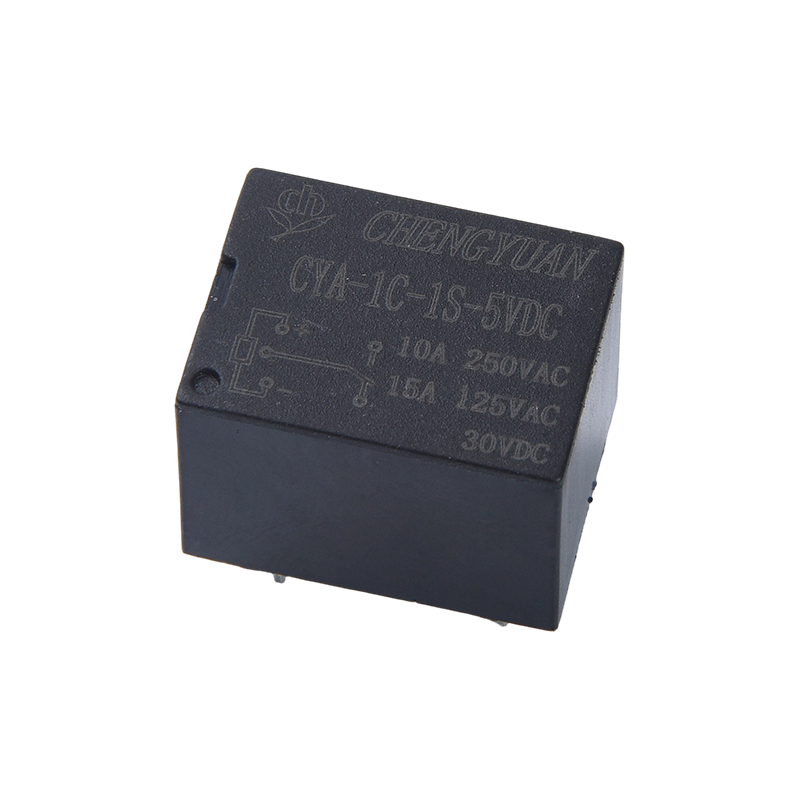
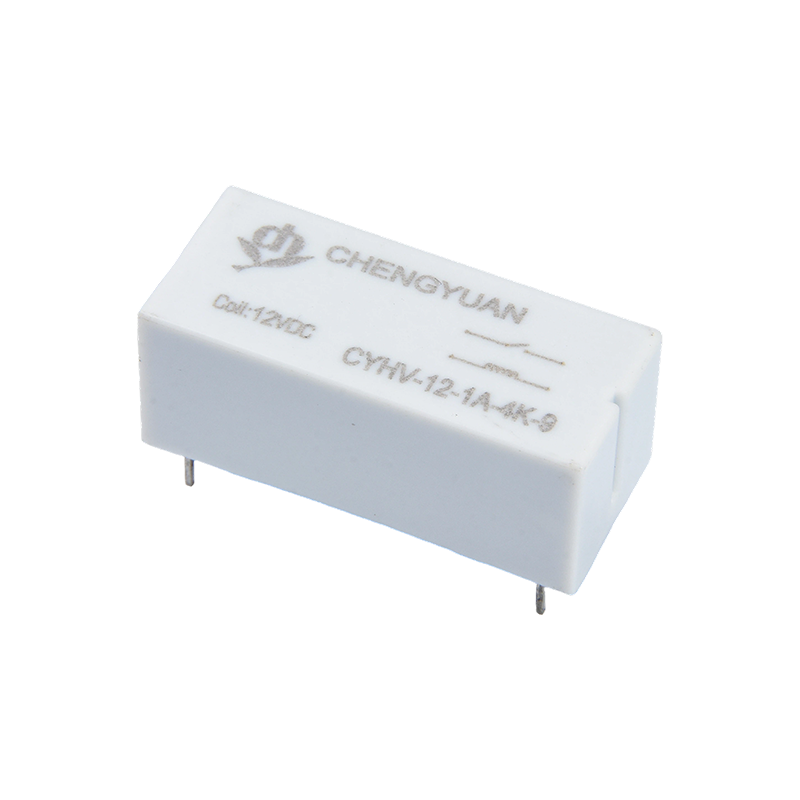
When the load is small, some equipment uses a power relay soldered to the control board instead of a separate panel contactor. A part such as the CYF3 SPST PCB relay, rated 16 A at 250 VAC, covers onboard switching where a full contactor would be oversized.
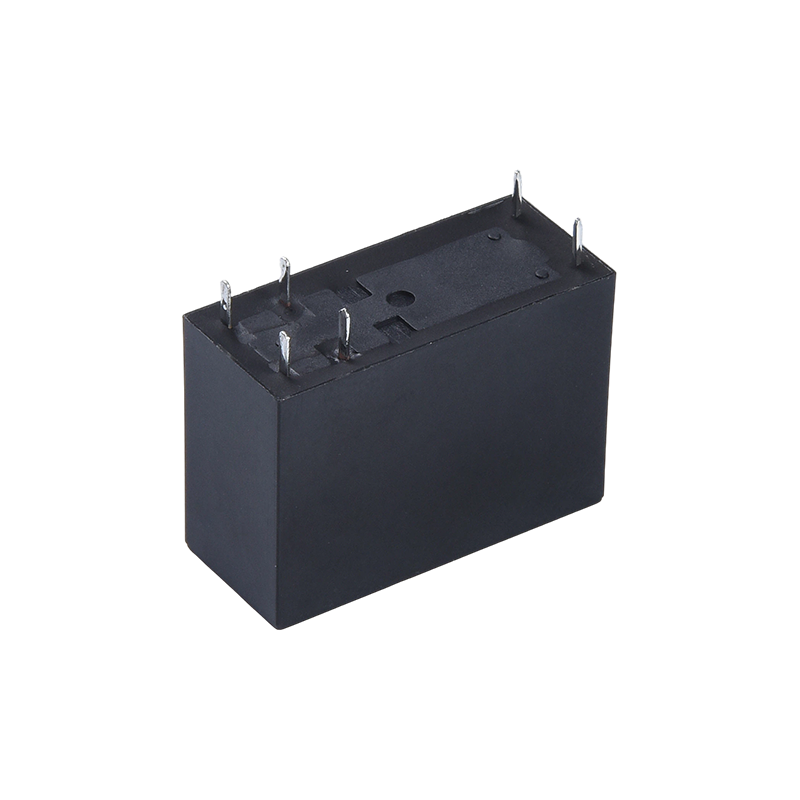 CYF3 PCB Relay for Onboard SwitchingA compact 16 A 250 VAC PCB relay for control-board switching where a separate panel contactor would be oversized; high coil-contact isolation supports compact equipment.View Product →
Symptoms That Tell You the Contactor Is Failing
A contactor rarely fails without warning. The failure pattern usually points to the exact part that gave up.
- No heat with the blower running: the coil is open, or the board is not delivering 24 VAC to it. Check voltage at the coil before condemning the part.
- Chattering or humming: the coil is not receiving enough voltage to hold the armature in, often a weak transformer or a corroded connection.
- Heat that will not shut off: the contacts have welded closed. The high limit switch is the only thing stopping the elements, and it will trip repeatedly until the contactor is replaced.
- Burnt smell or a discolored coil: coil insulation has failed, usually after a long period of chattering or a shorted control circuit.
- Pitted or blackened contacts: the contactor still closes, but resistance across the closed contacts has climbed, heat builds at the terminals, and the job turns into a wiring repair instead of a parts swap.
An energized voltage drop test catches that last case before it becomes expensive. With the contactor closed and the load running, measure across the line terminals of each pole. A healthy set of contacts drops only a fraction of a volt. Once the reading climbs past roughly half a volt at rated current, pitting is well underway and the part belongs in the next service visit, not the next breakdown.
Testing a Furnace Contactor in Six Steps
Testing takes about fifteen minutes with a multimeter.
- Shut off power at the furnace disconnect and at the breaker, then verify with a meter at the line terminals.
- Photograph the terminal layout before removing any wire.
- Disconnect the coil leads and measure coil resistance. Compare with the nameplate value or a known good unit. An open reading means a failed coil.
- Apply 24 VAC from a known good transformer directly to the coil. A firm single click means the magnetic circuit works. Buzzing or silence points to a coil or mechanical fault.
- With the coil de-energized, check continuity across each pole. It should read open. Energize the coil and confirm each pole reads closed.
- Reconnect everything, restore power, and measure voltage drop across the closed contacts under load. This step is the one most often skipped, and it is the one that predicts a repeat call.
Choosing a Replacement Without Downgrading the Circuit
The safest replacement matches the original on coil voltage, contact rating at the applied voltage, pole count, and mounting. The most common mistake is fitting a part because the bracket and terminals line up while the contact rating is lower than the original. A 30 A contactor in place of a 40 A part will work on a mild day and weld its contacts on the first cold morning when every element bank energizes at once.
Two habits prevent callbacks:
- Verify the actual load, not just the old label. If a blower motor or compressor was replaced with a different model, the full load amps may have changed.
- Check coil voltage at the terminals while the thermostat is calling. A reading well below 24 VAC means the contactor is not the root cause, and the transformer or control wiring needs attention first.
High current switching in heating and compressor circuits often comes down to a rugged single pole power relay with generous contact spacing and a coil that holds firmly at low voltage. A part such as the CYT90 high current SPST relay, rated 30 A to 40 A, is built for exactly this class of load.
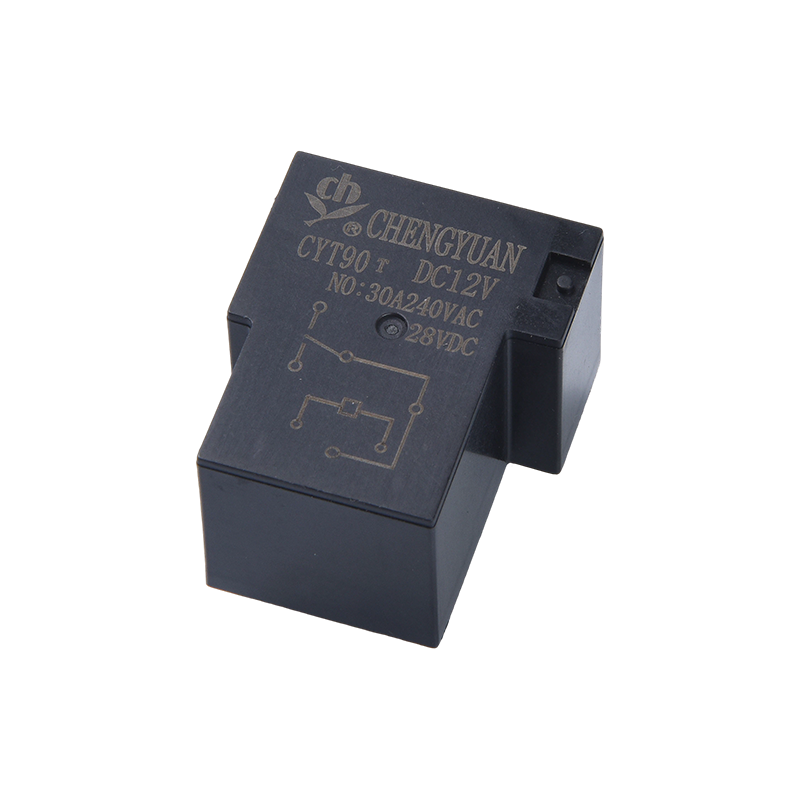 CYT90 High Current Relay for Heavy SwitchingA compact 30A/40A power relay with silver alloy contacts, multiple mounting options, and high-current switching for appliances, heaters, and industrial control equipment.View Product →
Where a Relay Ends and a Contactor Begins
The line between the two is a matter of duty and construction rather than a hard technical boundary. Contactors are built for definite purpose switching with wider contact gaps, heavier springs, and terminals that accept line wire. The principle underneath is the same as any general purpose electromagnetic relay: a coil generates a magnetic field that pulls an armature and moves contacts. What changes is the current, the contact material, and the mechanical strength of the moving parts.
Panel builders usually split the work across two levels. Power switching happens at the contactor or the high current relay. Isolation and interposing happen on rail mounted modules, which is where a part such as the MCYF3 14F rail relay module with 16 A contacts fits into a furnace control cabinet or a larger heating panel.
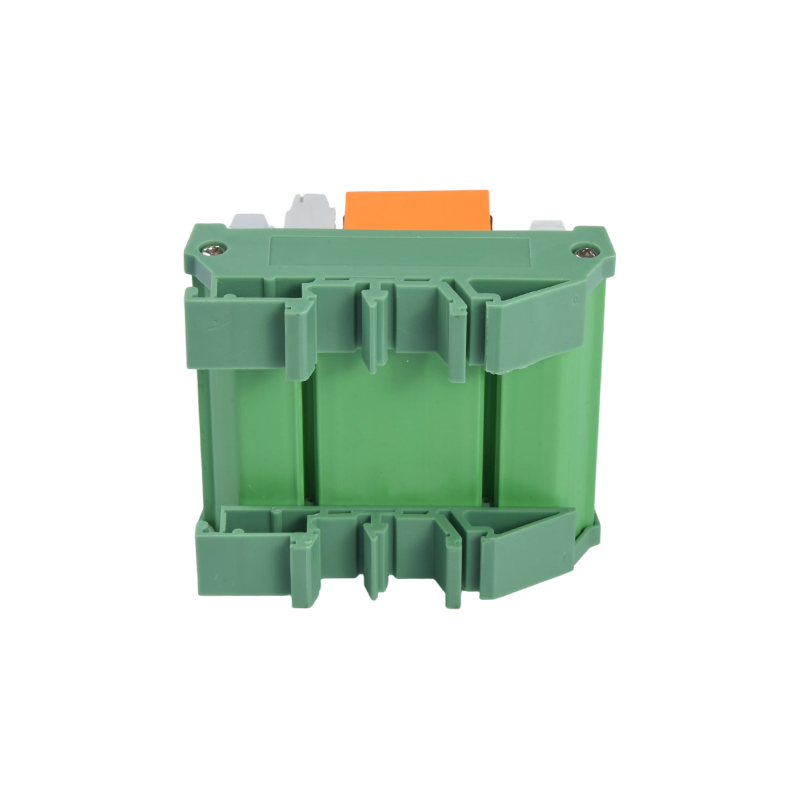 MCYF3 14F Rail Relay Module for Panel BuildersA rail-mounted 14F relay module with 16 A contacts and up to 32 channels, suited to centralized control and interposing in furnace or heating panels.View Product →
Questions Worth Asking When You Buy in Volume
For OEMs and panel builders, the contactor or relay is a small line item with a large effect on warranty cost. Three points are worth confirming before placing an order.
- Contact material and cycle life: silver tin oxide and silver cadmium oxide behave differently under resistive and inductive loads. Ask which material is used and what cycle count was tested at rated current.
- Coil consistency: batch to batch variation in pickup and dropout voltage shows up as chattering in the field. Ask how coils are tested before assembly.
- Production traceability: date codes, incoming material checks, and end of line contact resistance testing.
The supplier background matters as much as the datasheet. Ningbo Chengyuan Chuangke Electronics Co., Ltd., operating through cyrelays.com, has been producing relays and electronic components in Ningbo since 1996 and describes itself as a manufacturer combining development, production, and sales, with utility patents covering magnetic latching and snap fit structures. More detail is available on the about page.
A furnace contactor is a simple part with three critical numbers. Coil voltage, contact rating at the applied voltage, and pole configuration decide whether it survives a heating season or fails on the coldest morning of one. Get those right, verify the real load instead of the old label, and the contactor stops being a recurring service item.

 English
 中文简体
 Español